Iron Swords
Many men in our community were drafted to fight this war. The rest of us mobilized immediately to do our part.


We supported families who needed our help
Families of our reservists
We provided meals, child care, supportive meetups, and a personal buddy for each of the 80+ reservists’ wives in our community. Their husbands left to serve with no notice, for an indefinite period, and needed our help.
Displaced families from border towns
We found empty apartments, furnished them with second hand furniture and first hand appliances, as well as making these families feel welcome with thoughtful packages that went beyond the necessities.
Family farms in the south
We volunteered to harvest fields for farmers in the south who were left with few or no laborers since the beginning of the war. We also organized bulk orders of their produce — their livelihood was at risk.
Soldiers on the front lines
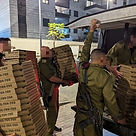
We sourced, packed, and delivered supplies to army bases, adjusting our operation as the war continued and the needs shifted, from tactical and medical supplies, to sleeping bags, and morale boosters like Shabbat meals and home baked goods.
Families of our reservists
Reservists in our community served on the front lines of the war. They left home with no warning, for an unknown duration, into danger, with no support set up for their wives and children at home. Our soldiers’ partners were alone, anxious, overwhelmed and in need of emotional and practical support.
Every one of the 66 wives of active reservists in our community was paired with a buddy who checked in on her and makde sure no needs fell through the cracks. We cooked and ordered takeout for them every week. We make sure they had Shabbat invitations and we organized childcare and supportive get togethers.

Displaced families from border towns
Families from the towns bordering Gaza just went through hell. Many were evacuated to hotels which just one month into the war, they needed to leave. Some found empty apartments in Carmei Gat and needed everything from furniture and appliances, to clothes and toys, to make these apartments livable. They had no idea when they’d be able to go home, if they’d be able to go home, and were not prepared financially or otherwise to start over.
We were able to source and deliver second hand items as well as purchase new items thanks to donations. We focused on their immediate necessities but also supporting them emotionally with warm welcoming gifts and hot meals.

Family farms in the south
The main industry in the area surrounding Gaza is agriculture. Farmers rely on foreign laborers and Arab workers to harvest their produce. When the war broke out, their workforce disappeared. Fields and fields of produce were spoiling and the farmers’ livelihood was at risk.
We supported agriculture in the south in two ways: We volunteered to pick fruit and other produce on the farms; and we organized bulk orders of the produce before the farmers lost everything.

Soldiers on the front lines
No one expected 360,000 reservists to show up all at once. From the beginning, help was needed supplying tactical equipment, medical supplies and other essential items. In addition, reservists reported for duty with no notice, for an indefinite amount of time, and needed hygiene products, socks, underwear, undershirts, and winter gear for bases in the north. Because we were in direct contact, in real time, with active units, we are able to source and deliver what they needed, as those needs changed over the course of the war.
No less important — we provided food for the belly and soul. Homemade baked goods, BBQs, shawarma deliveries, Shabbat meals, and letters from kids thanking our soldiers for keeping us safe, went a long way to fuel our soldiers on the front lines.